
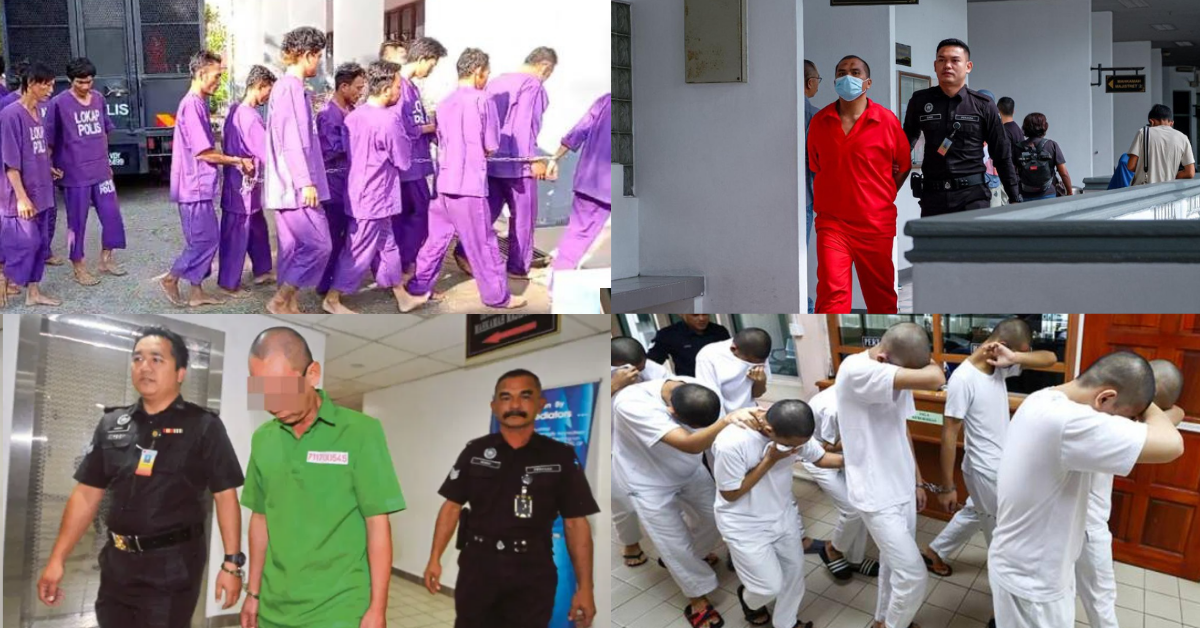
Those who have seen photos or videos of detainees in Malaysia may have observed that some detainees do not wear the same prison uniform. A few of the detainees are in orange; others are in purple. Convicted prisoners are also available in red, green, blue, white, and other colors. At first glance, the nuances may appear insignificant, but every color has a meaning in the country’s jails and prisons.
Different Agencies, Different Colours
One of the most common misunderstandings involves the difference between orange and purple uniforms. According to reports citing officials from Malaysia’s anti-corruption agency, detainees held by the Malaysian Anti-Corruption Commission are usually dressed in orange attire. Police-catching suspects are usually seen in purple uniforms, meanwhile.
This distinction allows authorities to identify which agency is handling a detainee’s case. The color of the uniform can therefore provide information beyond a person’s detention status.
What the Colours Represent
Purple uniforms are generally linked to remand detainees. These are people who are detained for the duration of investigations or for waiting for court action. The Malaysian police have to get permission from a magistrate to detain a suspect beyond 24 hours under the law.

People wearing orange are usually ones under investigation or charged but not convicted. Authorities usually give white clothing to those who serve shorter sentences for less serious offenses. Long-term inmates usually wear red uniforms, especially in the beginning of their incarceration.
The other colors show other levels of incarceration. Green uniforms often represent prisoners undergoing rehabilitation programs after serving part of their sentences. People frequently link blue uniforms to long-term inmates who participate in prison work programs.
Preparing for Release
Inmates nearing release generally wear a light green uniform, sometimes known as “Pucuk Pisang.” Authorities may select some of these prisoners for supervised work outside prison to help them return to society. People commonly associate a white-and-red combination with death row inmates awaiting execution or the outcome of legal appeals.
While uniform colors vary, detainees and prisoners continue to have legal rights and access to basic services. Authorities primarily use the color-coded system to easily determine a person’s legal status, sentence stage, and movement within Malaysia’s correctional system.
More from Wake Up Singapore:
Myanmar Frees 4,335 Prisoners in New Year Amnesty Amid Major Political Shift
Killing Son to End Half a Century of Caregiving Burden—Elderly Mother Sentenced to Prison
Anesthetist Poisoned 30 Patients to Humiliate Colleagues—Gets Life in Prison
If you have a story or a tip-off, email admin@wakeup.sg or get in touch via Whatsapp at 8882 5913.
Interested in advertising on our media channels? Reach out to us at admin@wakeup.sg!
Since you have made it to the end of the article, follow Wake Up Singapore on Telegram and X!
Wake Up Singapore is a volunteer-run site that covers alternative views in Singapore. If you want to volunteer with us, sign up here!