

Overview: Reactor Restart and Energy Impact
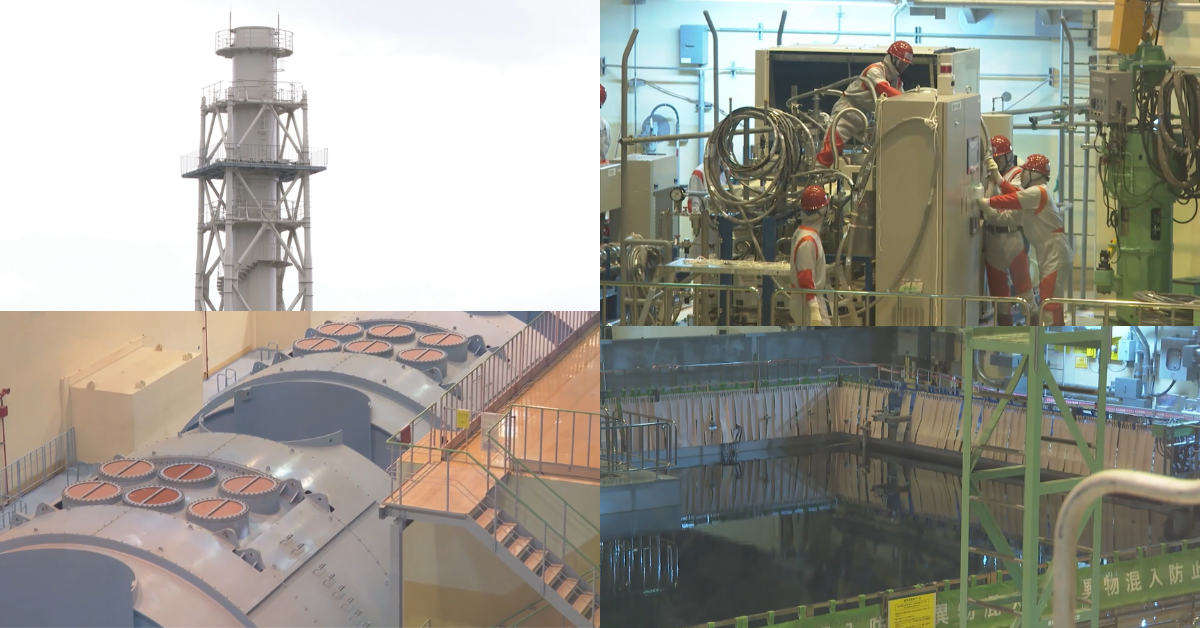
Officials at the Kashiwazaki-Kariwa Nuclear Power Plant in Niigata hope that the No. 6 reactor, which restarted operations last month after 14 years of closure, will cut Japan’s LNG imports through the Strait of Hormuz by about 30 percent.
Takeyuki Inagaki, the plant manager, said in an interview on Friday that Japan imports four million tonnes of Liquefied Natural Gas from Qatar each year via the Strait of Hormuz.
“If Unit 6 operates stably for one year, it will save approximately one to 1.3 million tonnes of LNG consumption,” Inagaki explained, hoping it would ‘mitigate some of the impact’ of the energy supply disruptions at the critical chokepoint.
Background: Fukushima Disaster and Safety Concerns
The plant shut down after the 2011 Fukushima Daiichi disaster. A major earthquake triggered a 15-metre tsunami, which disabled the power supply and cooling of three Fukushima Daiichi reactors, causing a nuclear accident.
The accident was rated Level 7 on the International Nuclear and Radiological Event Scale due to high radioactive releases, totalling approximately 940 PBq (I-131 eq).
After a few security lapses and operational glitches, the plant restarted its No. 6 reactor on April 16.
“Safety is our top priority,” Inagaki stressed. “Restarting the reactors was a major mission for us, especially considering the current situation in the Middle East, to ensure stable operation.”
Preparedness: Infrastructure Upgrades and Staff Training
After the disaster, the Tokyo Electric Power Company built a 15-metre seawall around the reactor for reinforcement.
“Reactor Units 6 and 7 are located on a site approximately 12 metres above sea level,” he noted. “The maximum tsunami height is estimated to be just over 8 metres. Therefore, it is assumed that a tsunami will not reach this site.”
He added that the management is extensively training its young employees working at Units 6 and 7, who make up most of the operations staff. He detailed that the operators are being trained on thermal power plants, whose turbine and generator parts are similar to those of a nuclear power plant.
“There is a facility with a simulator that is exactly like a central control room, where operators spend about one-fifth of the year, roughly 70 days or more, training […] to respond appropriately to abnormalities in startup and shutdown and accidents,” the manager detailed.
Regional Context: Energy Security and Global Risks
Tokyo Electric Power Company Holdings began commercial operation of the No. 6 reactor at its Kashiwazaki-Kariwa Nuclear Power Plant on the first day of its service return, marking the company’s first full nuclear reactor restart since the Fukushima Daiichi nuclear disaster.
Asia is critically dependent on the Strait of Hormuz, with over 80 percent of oil and LNG passing through it. During the US-Israel war on Iran, Qatar’s Ras Laffan Industrial City, the world’s largest LNG complex, was forced to shut down after missile and drone attacks.
Article by Viory