
No Result
View All Result
  • Home
  • Politics
    • Causes
      • Resources
  • Features
    • Opinions
  • Lifestyle
    • Finance
  • World
  • About Us
  • Home
  • Politics
    • Causes
      • Resources
  • Features
    • Opinions
  • Lifestyle
    • Finance
  • World
  • About Us
No Result
View All Result
  • Home
  • Politics
  • Features
  • Lifestyle
  • World
  • About Us
Home World

Crimson surf – Omani beach turns red after mass wash-up of dead shrimp

Ella Chan by Ella Chan
April 25, 2026
in World
Reading Time: 2 mins read
Patagonian ‘missing link’ – New 160-million-year-old dinosaur species found in Chubut sheds light on sauropod evolution
Facebook

Unusual Red Tide Phenomenon in Mirbat

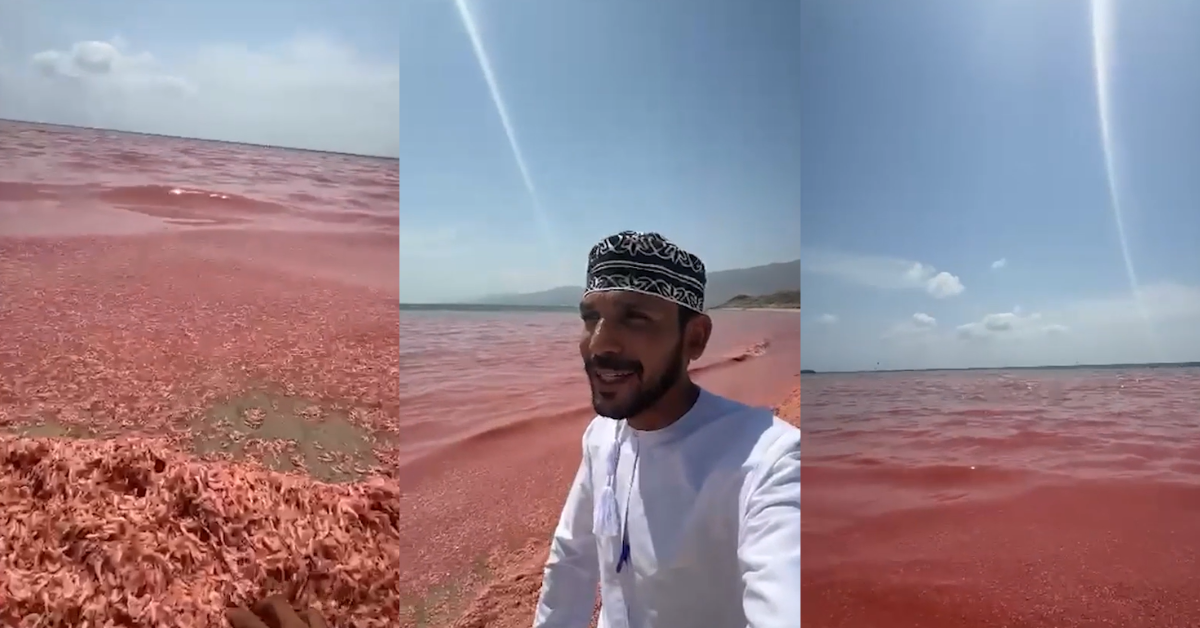
A beach in the Omani province of Mirbat turned red after thousands of dead shrimps washed ashore, while Omani authorities said that the incident was natural and that no signs of environmental pollution had been recorded.

Eyewitness Footage Captures Shocking Scene

Footage released by Omani activist Nasib bin Amer on Thursday shows the beach and seawater coloured red, with large quantities of small dead crustaceans washed ashore.

Screengrab of video

Bin Amer was heard saying, “Look at the colour of the sea and the amount of dead shrimp on the beach.”

Authorities Explain Natural Causes

Oman’s Ministry of Agriculture, Fisheries, and Water Resources clarified in a post on X on Wednesday that the deaths of small crustaceans (such as small shrimp or krill) were caused by natural and climatic factors.

Environmental Factors Behind the Incident

According to the ministry, the most likely causes include sudden changes in water temperature, low dissolved oxygen levels, and the impact of strong sea currents pushing the organisms into areas unsuitable for survival.
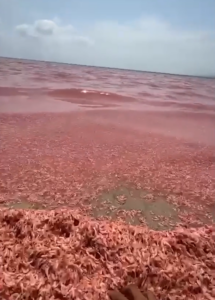
Screengrab of video

The ministry added that a team from the Fisheries Research Centre in Dhofar Governorate inspected several locations and found no evidence of environmental pollution or deaths among other marine species.

It added that these crustaceans are highly sensitive to changes in marine conditions.

Article by Viory

More from Wake Up Singapore:

Bali Police Investigate Brutal Kidnapping After Tourist’s Body Parts Found on Beach

Vegan Activist Sparks Heated Clash With Family Fishing at Bondi Beach

Black rain! – Cars, beaches covered after Ukrainian drone attack on petroleum refinery in southern Russia

If you have a story or a tip-off, email admin@wakeup.sg or get in touch via Whatsapp at 8882 5913.

Tourist Destinations

Interested in advertising on our media channels? Reach out to us at admin@wakeup.sg!


Since you have made it to the end of the article, follow Wake Up Singapore on Telegram and X!

Singapore local experiences

Wake Up Singapore is a volunteer-run site that covers alternative views in Singapore. If you want to volunteer with us, sign up here!

Previous Post

Patagonian ‘missing link’ – New 160-million-year-old dinosaur species found in Chubut sheds light on sauropod evolution

Related Posts

Patagonian ‘missing link’ – New 160-million-year-old dinosaur species found in Chubut sheds light on sauropod evolution
World

Patagonian ‘missing link’ – New 160-million-year-old dinosaur species found in Chubut sheds light on sauropod evolution

April 25, 2026
‘We have seen some reports’ – India’s MEA on Trump’s ‘hellhole’ repost, says Indian seafarers in Strait of Hormuz ‘safe’
World

‘We have seen some reports’ – India’s MEA on Trump’s ‘hellhole’ repost, says Indian seafarers in Strait of Hormuz ‘safe’

April 25, 2026

Categories

  • Causes
  • Entertainment
  • Features
  • Finance
  • Home
  • Lifestyle
  • Opinions
  • Palestine
  • Politics
  • Resources
  • Singapore News
  • World
  • Advertise
  • Careers
  • Privacy Policy
  • Contact

© 2025 Wake Up, Singapore

No Result
View All Result
  • Home
  • Politics
    • Causes
      • Resources
  • Features
    • Opinions
  • Lifestyle
    • Finance
  • World
  • About Us

© 2025 Wake Up, Singapore