

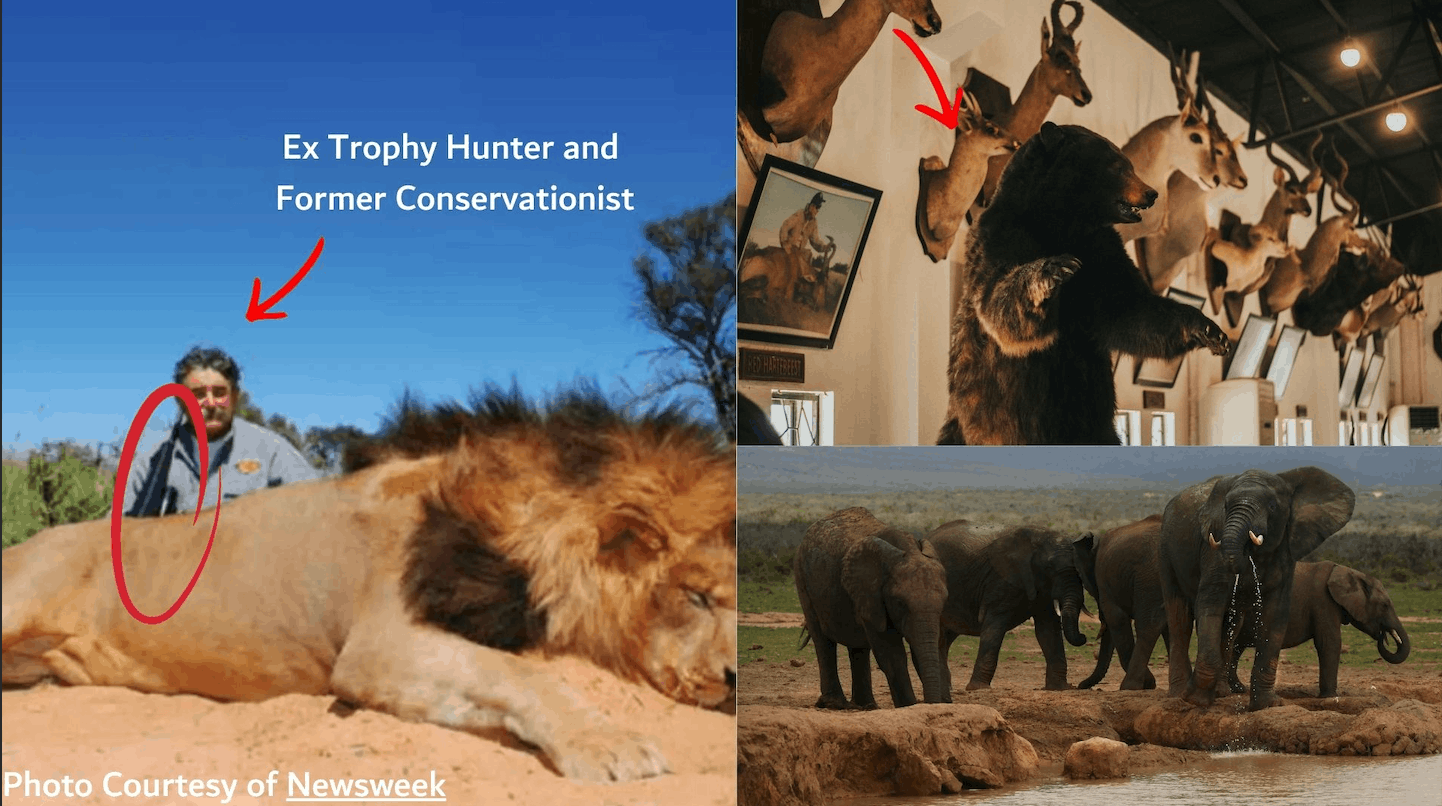
Ernie Dosio, a 75-year-old hunter who combined conservation work with trophy hunting, spent decades tracking animals and collecting animal heads. The scenario changed during a hunt for a yellow-backed duiker valued at $40,000 (S$36,600). What began as a regulated hunting trip ended in chaos deep within the African wilderness.

Photo Courtesy of LBC
The Infamous Hunting Legacy
Ernie Dosio spent his time as a hobbyist trophy hunter collecting heads of different animals. Inside his house in Lodi, California, hundreds of mounted animals covered the walls. Rhinos, lions, leopards, all frozen in time. To fellow hunters, this was legacy. Proof of skill, patience, and years spent mastering the chase.
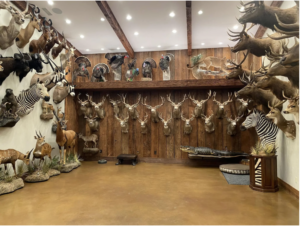
Photo Courtesy of The New York Post
While the fellow hunters see it as a win, others see it as a loss. It is a testament for critics to view it as rather animalistic behavior to do. The trophy heads on the wall represent the life that once existed. And in the end, the passion that built Dosio’s identity is the same one that brought him back into the wild for the last time.
Coincidence or Consequence?
Dosio was on a mission to hunt a yellow backed duiker, a rare forest antelope hidden deep in Gabon’s jungle. The cost alone is S$36,000, turning the hunt into a gamifying challenge for him. In exchange for hunting, he receives karma for his consequences. Due to the regulations for hunting, he cannot use the rifle, but rather a shotgun, which became tragic when elephants came by.
Screengrab of the article
At that moment, experience and money meant very little. The jungle does not follow human rules. A weapon meant for small prey stood no chance against the force of several elephants. The severity of the casualty creates a cautionary tale of how control is never guaranteed.
The Hunting Policy
Trophy hunting, which is supported by CITES from the IUCN, is frequently presented as “hidden conservation,” where hefty fees support conservation, anti-poaching initiatives, and remote villages with little tourism. The reality is more brittle than it seems. Some regions of Africa are legal but strictly regulated, with prices ranging from $1,270 SGD to $12,750 SGD depending on the species. Advocates refer to it as “funding for survival.” Critics claim that making animals a paid target makes it impossible to overlook ethics.

Screengrab of the article
Gen Z’s Verdict
For younger generations, it isn’t about policies or permits. Empathy is the key. Thanks in large part to social media, Gen Z and Millennials are changing people’s perceptions about hunting. Trophy hunting is perceived as an act of exploitation rather than a conservation. To pose with a dead animal is redeemable as uncomfortable. What was once regarded as prestigious now seems antiquated.
Ernie Dosio’s death has sparked debate about the boundaries between animal welfare law and morality. Despite the hunt’s alleged legality, public opinion remains starkly divided. Some consider it to be a catastrophic wild accident.
For many younger readers, the argument seems self-reflexive. The issue of whether the system discreetly uses or protects animals is far more important than whether it is legal. Laws are already being influenced by public pressure, and destructive behaviour is not justified by legality.
Mor from Wake Up Singapore:-
Captive Elephant Turns Violent During Kerala Temple Festival, One-Person-Killed
Malaysia Animal Abuse Case: Man Arrested After Viral Puppy Video
Alpaca Among Other Animals Living in Filth at M’sia Pet Café, Owner Denied Abuse
If you have a story or a tip-off, email admin@wakeup.sg or get in touch via Whatsapp at 8882 5913.
Interested in advertising on our media channels? Reach out to us at admin@wakeup.sg!
Since you have made it to the end of the article, follow Wake Up Singapore on Telegram and X!
Wake Up Singapore is a volunteer-run site that covers alternative views in Singapore. If you want to volunteer with us, sign up here!