

Article by Viory
Irrigation drones now sweep over Balfour’s maize fields, replacing diesel-heavy machinery with precise, low-cost spraying as South African farmers turn to technology to grapple with rising fuel costs and fertiliser shortages that threaten national food security.
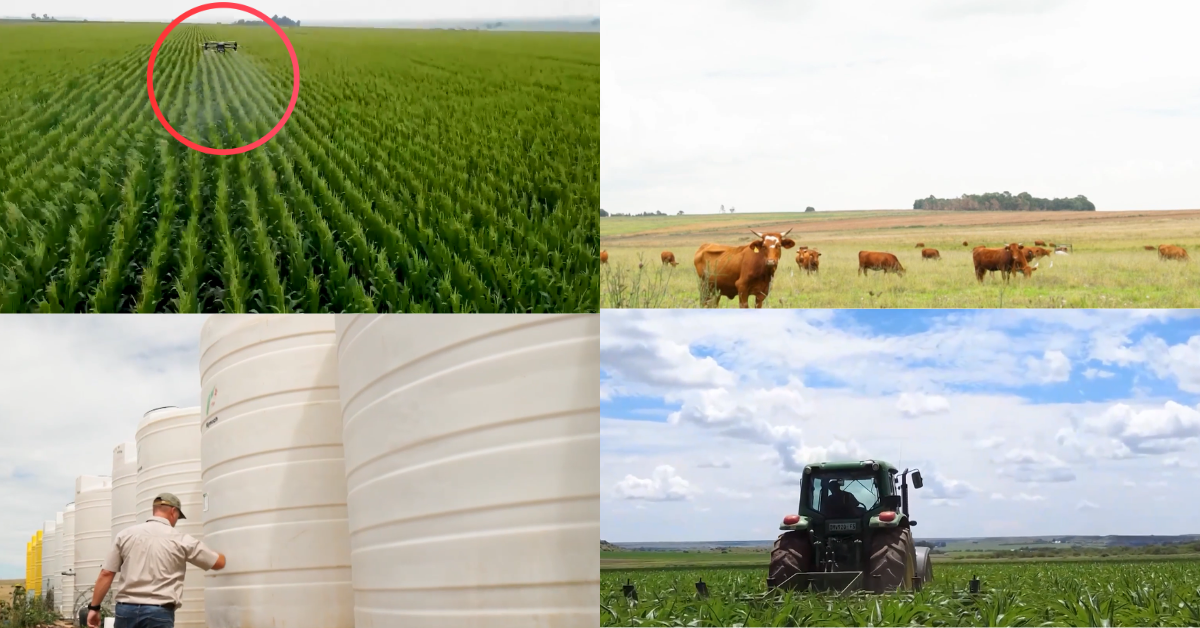
Footage captured on Thursday shows an irrigation drone watering crops at a Balfour farm, with rows of idle heavy machinery standing by as farmers seek to conserve fuel amid uncertainty over strained supply chains.
“The running costs of [the drone], compared to the other sprayers that we do run, like our high clearance sprayers – we can burn up to 400 litres of fuel a day, whereas this we only burn like 60 litres of fuel,” explained farmer Danie Bester.
“It’s definitely worthwhile,” he said. “I just think overall, this is the type of thing that you need to think outside of the box for, and look for alternative options to be more effective with what you have available.”
With harvest approaching for staple crops such as maize, wheat and soybeans, South Africa’s agricultural sector is under mounting pressure from global supply chain disruptions, as the ongoing war in Iran chokes key shipping routes through the Strait of Hormuz.
With the strait serving as a vital artery for fuel and fertiliser trade, farmers are grappling with acute shortages – especially as South Africa relies on imports for around 80% of its fertiliser supply.
“Out of all these bins that run down here, I’ve only got one 10,000-liter container or bin that’s full of fertiliser. So that is worrying,” Bester said.
“It’s definitely going to be difficult to achieve the type of yields that I’m getting if I am not going to be able to get access to all the fertility that I do need,” he warned.
Bester described the recent surge in fuel prices as a ‘nightmare,’ warning it could undermine farmers’ ability to maintain the productivity needed for the next season.
Energy pressures mount following the escalation in the Middle East triggered by joint US-Israeli strikes on Iran on February 28.
The Strait of Hormuz is a critical global chokepoint, with approximately 20 percent of the world’s total oil and liquefied natural gas (LNG) supplies passing through it daily. Iran’s de facto blockade of the 21-mile-wide waterway has disrupted about 20 million barrels of daily oil flow, pushing international oil prices up to over $100 per barrel.
Article by Viory
More from Wake Up Singapore:
Walmart Tests New Delivery Drones That Drop Customer Packages Safely From the Skies
Iran Releases Footage of Underground Drone and Missile Tunnel Facility
Shooting for the stars! – SpaceX launches Falcon 9 rocket with 25 Starlink satellites on board
If you have a story or a tip-off, email admin@wakeup.sg or get in touch via Whatsapp at 8882 5913.
Interested in advertising on our media channels? Reach out to us at admin@wakeup.sg!
Since you have made it to the end of the article, follow Wake Up Singapore on Telegram and X!
Wake Up Singapore is a volunteer-run site that covers alternative views in Singapore. If you want to volunteer with us, sign up here!