

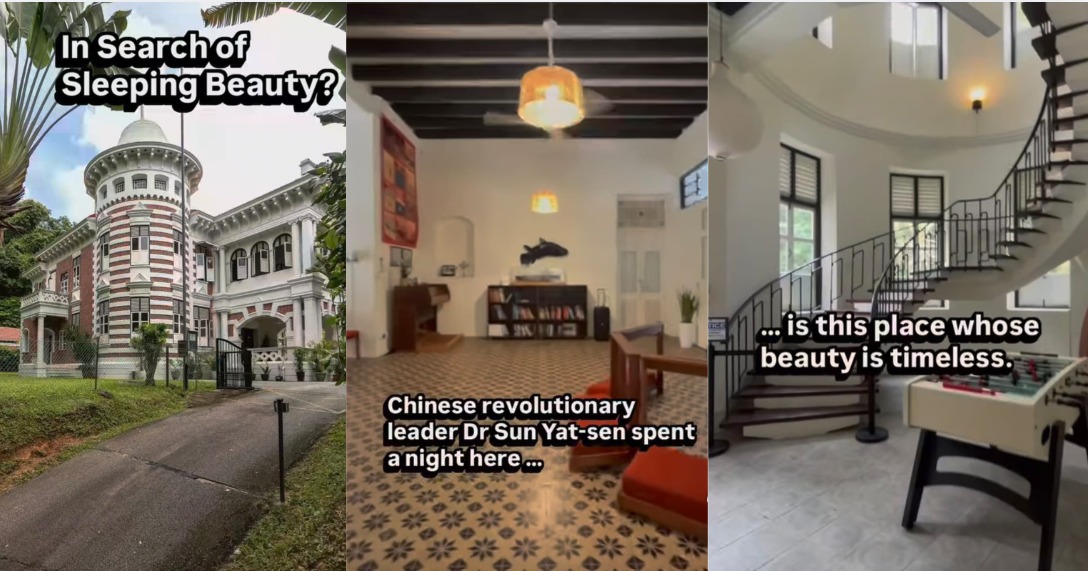
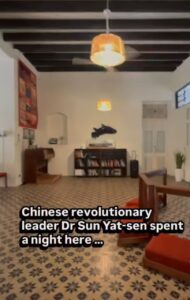
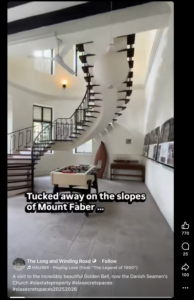
Among the historical buildings in Singapore, the Golden Bell Mansion, standing on a hilltop, has long been a center of curiosity and excitement. Built in 1910 as the residence of businessman Tan Boo Liat, this Edwardian-style mansion has witnessed many changes over time. Historical sources indicate that Chinese revolutionary leader Sun Yat-sen stayed here for a night in 1911.
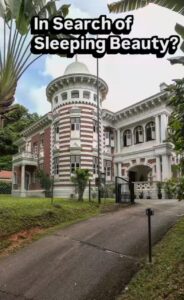
The grandeur of the mansion easily catches the eye on the way down the mountain slope from Mount Faber. Since 1985, it has been used by the Danish Siemens Church and is currently managed as a state property.
The Beginning of the Mansion
When the Golden Bell was built, it was one of the most luxurious residences in the city. Although it was only for a short time, it was used to host lavish parties and guest receptions. Designed by local architect Wee Teck Moh, the mansion features the popular mixed brick and plaster architectural style of the time.
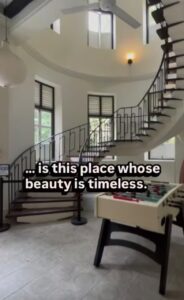
Some local features, such as the roof ornamentation of Buddhist stupas, were also added. Over time, the palace’s exciting image has become more solid.
College Dream
In 1914, the Methodist Mission began planning to establish an institution of higher education in Singapore. William F. Oldham and later James Stewart Nagle were behind this initiative. Influential figures such as Tan Kah Kee, Lee Choon Guan and Tan Cheng Lock joined the college council.
By 1917, about 26 acres of land were acquired in the Telok Blangah area, which included the Golden Bell. However, the plan to establish a college ultimately fell through due to lack of support from the British colonial government.
Private Hospital
Another lesser-known chapter in the history of Golden Bell is the opening of the “Singapore Private Hospital” here in 1924. This small hospital located in a hilly area had accommodation for about 14 patients. Newspaper reports also mentioned that it was equipped with modern operation theatres and X-ray facilities.
However, the hospital closed within a year and in 1925 an advertisement was published for the auction of the equipment. The property was later used for various purposes by the Methodist Mission.
Subsequent Ownership
Over time, the palace came under the control of the Port of Singapore Authority and remained in their use until 1985. It was later leased to the Danish Seamen’s Church and is currently managed by the Singapore Land Authority.
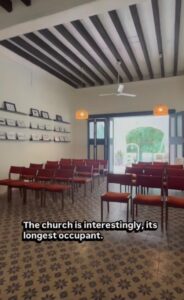
The Golden Bell is still considered an important monument among the heritage buildings of Singapore. The palace, with its history, architecture and educational dreams, keeps the city’s past alive.
Watch the video here:
More from Wake Up Singapore:
Hidden for Years: Grave Connected to Singapore’s ‘Seven Saints’ Discovered
Hidden in Bukit Timah: Singapore’s 1936 Washing Basin That Time Forgot
Singapore’s Forgotten Palace: Inside the Abandoned Haw Par Beach Villa on Coney Island
If you have a story or a tip-off, email admin@wakeup.sg or get in touch via Whatsapp at 8882 5913.
Interested in advertising on our media channels? Reach out to us at admin@wakeup.sg!
Since you have made it to the end of the article, follow Wake Up Singapore on Telegram and X!
Wake Up Singapore is a volunteer-run site that covers alternative views in Singapore. If you want to volunteer with us, sign up here!