
Night Patrols Against Rising Heat
Local communities are taking their fight to the beaches to protect sea turtles from a changing climate in Panama’s Azuero Peninsula, as rising temperatures, coastal erosion and human pressure are threatening nesting grounds.
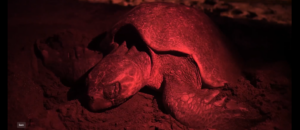
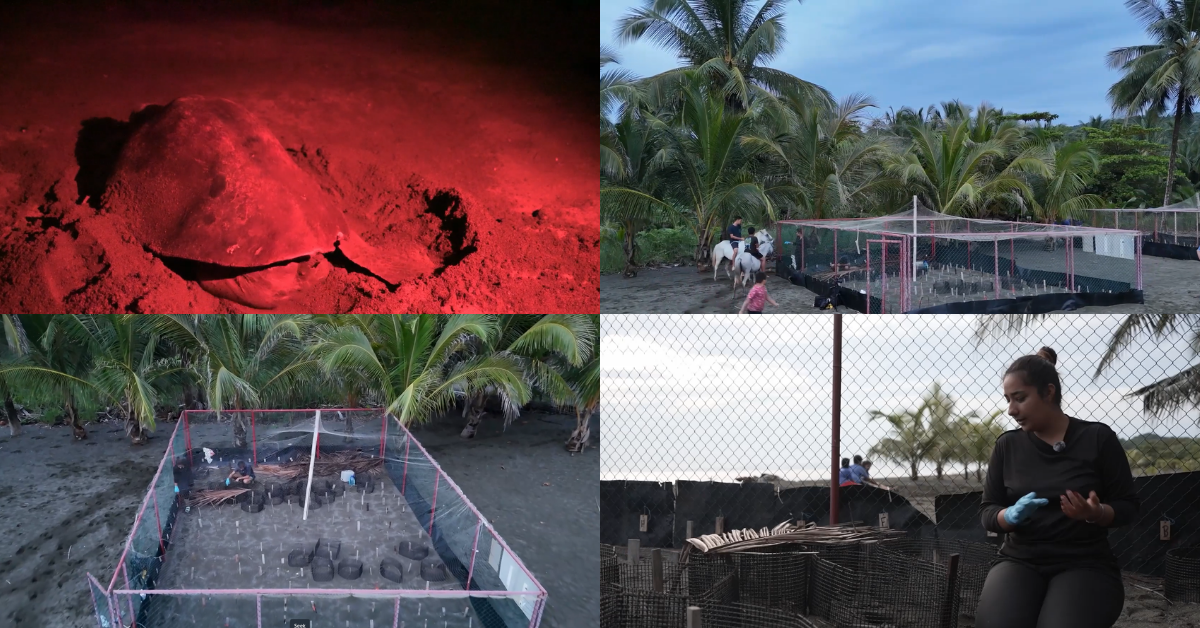
Every night, dressed in black and carrying red lights, young volunteers patrol the beaches of Mariato in southwestern Panama, looking for sea turtle nests and protecting them from threats both old and new. One of the newest threats for these reptiles is climate change, which is making the sand hotter and can affect the sex of hatchlings and produce more females. At temperatures above about 34 degrees Celsius, embryos can also die, reducing the number of turtles that successfully hatch.
“What is foreseen with climate change and the rise in temperature is a possible feminisation, higher production of females than males, which could affect reproductive cycles and population stability. Above 34 degrees, embryonic death could occur. In other words, there is also a threat of lower hatching success due to high temperatures,” explained Jacinto Rodriguez, President of Fundacion Agua y Tierra.
Adapting to Shifting Shorelines and Traditions
Rising tides and erosion have pushed the shoreline farther into the vegetation. In 2023, erosion destroyed the community’s last beachside hatchery, wiping out 75 nests. “So we have had to clear small spaces within the vegetation on the upper part to be able to set up the hatcheries,” added Rodriguez.
But conservation is also changing attitudes. For generations, collecting and eating turtle eggs was part of local tradition. Today, more residents see protecting the turtles as a responsibility to future generations.
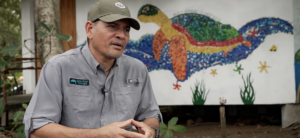
“Before, people didn’t really care, but now they do, because if you see someone with those eggs, you say, ‘Damn, don’t do that, because we have to conserve them. ‘And before, we didn’t have that idea that we had to conserve them,” said Eleida Rosario, a Mariato resident.
A Decades-Long Effort Bears Fruit
Now, after more than two decades of conservation work, the numbers are offering a reason for hope. At Playa Malena, about 6,000 hatchlings were released between 2002 and 2006. During the 2025 season, that figure climbed to approximately 68,800.
Article by Viory
More from Wake Up Singapore:
Wild Duck Spotted in Bedok Has Singaporeans Wondering What Animal Comes Next
“Animal Care” in Dubai Showcases Safety and Belonging to Stray Cats
If you have a story or a tip-off, email admin@wakeup.sg or get in touch via Whatsapp at 8882 5913.
Interested in advertising on our media channels? Reach out to us at admin@wakeup.sg!
Since you have made it to the end of the article, follow Wake Up Singapore on Telegram and X!
Wake Up Singapore is a volunteer-run site that covers alternative views in Singapore. If you want to volunteer with us, sign up here!