

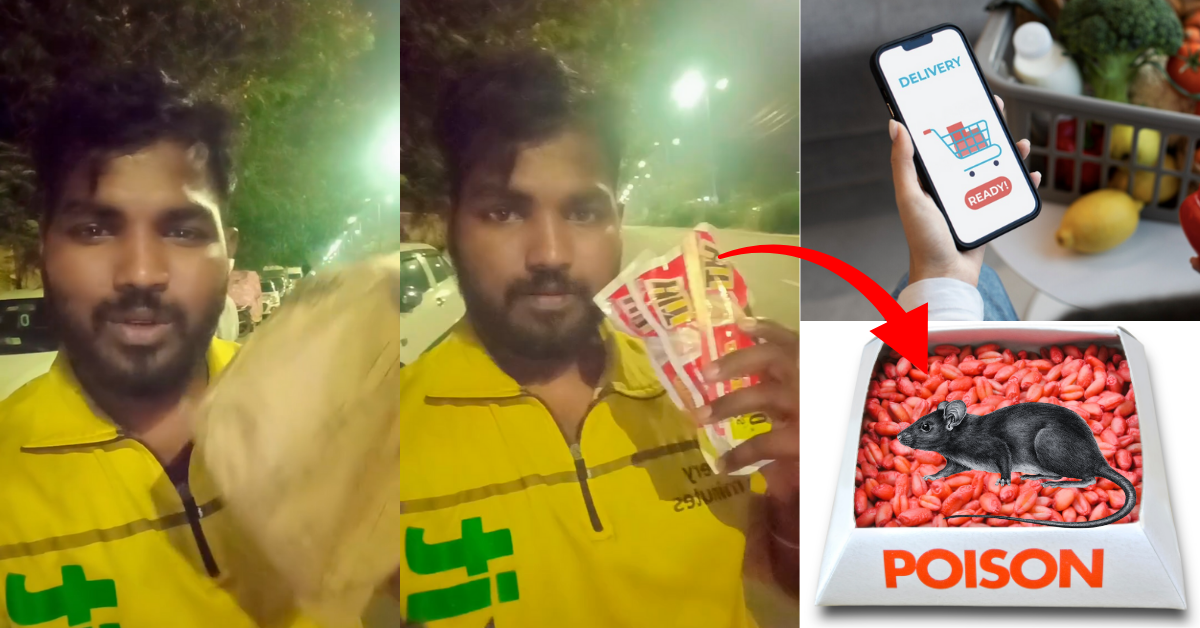
On 8 January, an order of rat poison made the news in India as a delivery rider did not want to deliver the item after he saw that the buyer was in distress. The story which initially appeared on his social media page and afterward went viral, set off discussions about the necessity of human decision-making in the rapidly expanding on-demand delivery industry.
The rider works for Blinkit, an Indian quick-commerce platform that promises deliveries of groceries and daily essentials in minutes. Similar in concept to local instant delivery services, Blinkit operates through gig workers who receive itemised orders via an app and collect goods from nearby fulfilment hubs.
A Late-Night Order that Raised Concern
The midnight order of rat poison in three packets was the task given to the rider as per various social media posts. As he reached the customer’s place, he found a woman at the door crying and very upset. The rider then decided not to give the items right away, as he guessed something was wrong. Moreover, the rider did talk to the woman, trying to get her side of the story.

The woman insisted that she did not mean to harm anyone but still, he was not sure about the whole delivery process and so for safety he cancelled the order and took the poison back with him. He later on explained on the internet that the situation made it impossible for him to go on with the delivery.
The rider in the Instagram video said that he was questioning the necessity of this product at that particular time and felt that he should be doubly cautious after seeing the customer in such a state. He went on to say that it was his decision to cancel the order which he strongly believed in and characterized it as the right thing to do at that moment.
Social Media Reaction and Public Debate
The story quickly went viral, with many users praising the rider for his presence of mind and compassion. Posts describing the incident framed it as an example of “humanity over algorithms”, contrasting the rider’s judgement with the automated nature of app-based delivery systems.
Others used the incident to raise broader questions about how much information delivery workers can see. Commenters noted that Blinkit riders typically view full order details and often handle open bags, making it difficult to keep purchases private.
Reactions were not entirely uniform. While many applauded the rider’s actions, some questioned where the line should be drawn between fulfilling an order and exercising personal discretion, particularly in a gig economy built around speed and efficiency.
Larger Questions for Gig Platforms
The Chennai incident has since evolved into a wider conversation about ethical limits, worker autonomy and customer welfare in on-demand services. Several social media users have called on Blinkit to formally recognise the rider’s actions, though the company has not issued a public statement at the time of writing.
What began as a routine delivery has since become a reference point in discussions about whether quick-commerce platforms leave enough room for human discretion — and what responsibility, if any, delivery workers should bear beyond completing an order.
Watch the video here:
More from Wake Up Singapore:-
This is Malaysia: Chinese ‘Uncle’ Became a Parent for His Indian Neighbor’s Child
The Legend Returns: Rajinikanth’s Iconic ‘Padayappa’ to Screen in Singapore Starting December 22
If you have a story or a tip-off, email admin@wakeup.sg or get in touch via Whatsapp at 8882 5913.
Interested in advertising on our media channels? Reach out to us at admin@wakeup.sg!
Since you have made it to the end of the article, follow Wake Up Singapore on Telegram and X!
Wake Up Singapore is a volunteer-run site that covers alternative views in Singapore. If you want to volunteer with us, sign up here!