

Rainy Days, Higher Demand — but also Higher Pressure
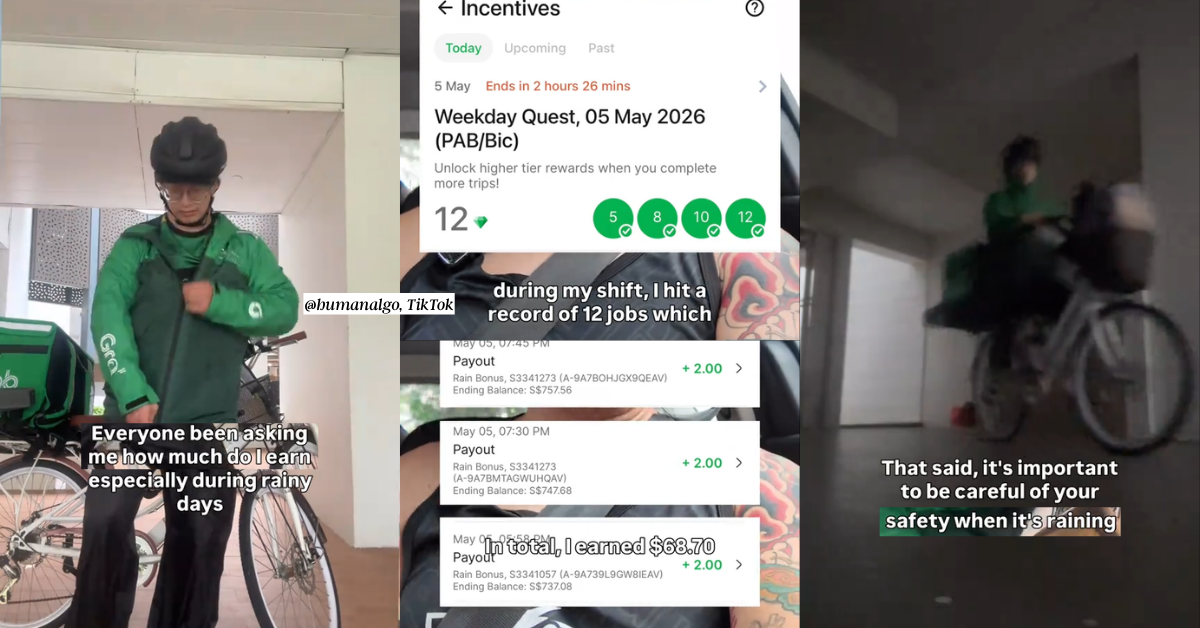
A Singapore content creator who also works as a delivery rider has shared a breakdown of what earnings really look like during rainy weather shifts — and it is not as straightforward as many assume.
Responding to frequent questions online about how much delivery riders make, Shawn Lim explained that rainy days usually come with platform-issued “rain bonuses” of around $2 per order, which apply only for as long as the rain continues.

According to him, the system appears to track rainfall duration closely, with incentives starting and stopping in line with weather conditions — sometimes lasting just an hour, other times up to two hours.
A Record Shift: 12 Deliveries in the Rain
On one rainy Tuesday shift, he completed a personal record of 12 deliveries — a volume he said he had never reached before.
He attributed the spike in orders to customers staying indoors due to the weather.
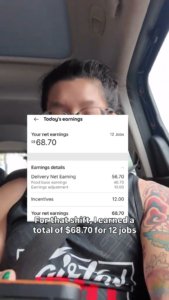
By the end of the shift, he earned a total of $68.70, broken down into:
- $46.70 from food delivery fees
- $12 from rain bonuses
- Remaining earnings from base payouts per order
Despite the higher-than-usual volume, he noted that the workload was physically demanding, especially when navigating hilly areas like Bukit Timah under wet conditions.
Tips Remain Unpredictable — Even in Bad Weather
While rainy shifts are often assumed to bring in higher income overall, he pointed out that tips remain inconsistent. He shared that on his recent shift, he did not receive any tips at all — something he said could have increased his total earnings further.

“Sometimes during rainy periods, you can earn even more because of tips,” he explained. “But sometimes people don’t tip even when the weather is bad.”
“Don’t rush just to complete more orders”
Beyond earnings, he also highlighted safety concerns, urging riders not to rush during wet conditions just to increase the number of deliveries completed.

He said fatigue builds quickly in heavy rain, especially when navigating long distances and steep roads. By the end of his 12-delivery shift, he described being physically drained, saying his energy was “totally gone” after hours on the road.
While rain bonuses can temporarily boost income, the creator stressed that the work becomes significantly more demanding during storms — both physically and mentally.

He encouraged viewers interested in delivery work to understand the balance between higher earning opportunities and increased risk, especially when weather conditions worsen.
“If you want to know more about what it’s like being a delivery partner,” he added, “you can always reach out. I’m happy to share.”
A Closer Look at Gig Work in Singapore
His breakdown has sparked discussion online about how gig economy earnings are shaped not just by demand, but by external factors like weather — and how much of that “extra income” comes with added effort behind the scenes.
Watch the video here:
@humanalgo Everyone orders in when it rains. While some riders stay home, the ones who don’t earn more because of surge fees, better volume, or the rare customers who tip out of guilt or gratitude. However, nobody talks about what that shift actually looks like. We are soaked through and sometimes take risks that no algorithm accounts for. The gig economy rewards showing up, but never mentions what showing up actually costs. If you can, please tip your delivery rider 😊 #foryoupage #singapore #grab #sgtiktok #grabfood
♬ original sound – Shawn | Authenticity Coach – Shawn | Authenticity Coach
More from Wake Up Singapore:-
Malaysian Delivery Rider Receives RM1,000 Tip—Video Goes Viral
If you have a story or a tip-off, email admin@wakeup.sg or get in touch via Whatsapp at 8882 5913.
Interested in advertising on our media channels? Reach out to us at admin@wakeup.sg!
Since you have made it to the end of the article, follow Wake Up Singapore on Telegram and X!
Wake Up Singapore is a volunteer-run site that covers alternative views in Singapore. If you want to volunteer with us, sign up here!