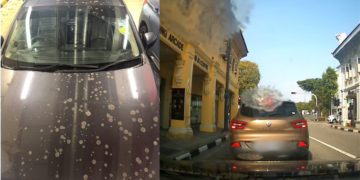

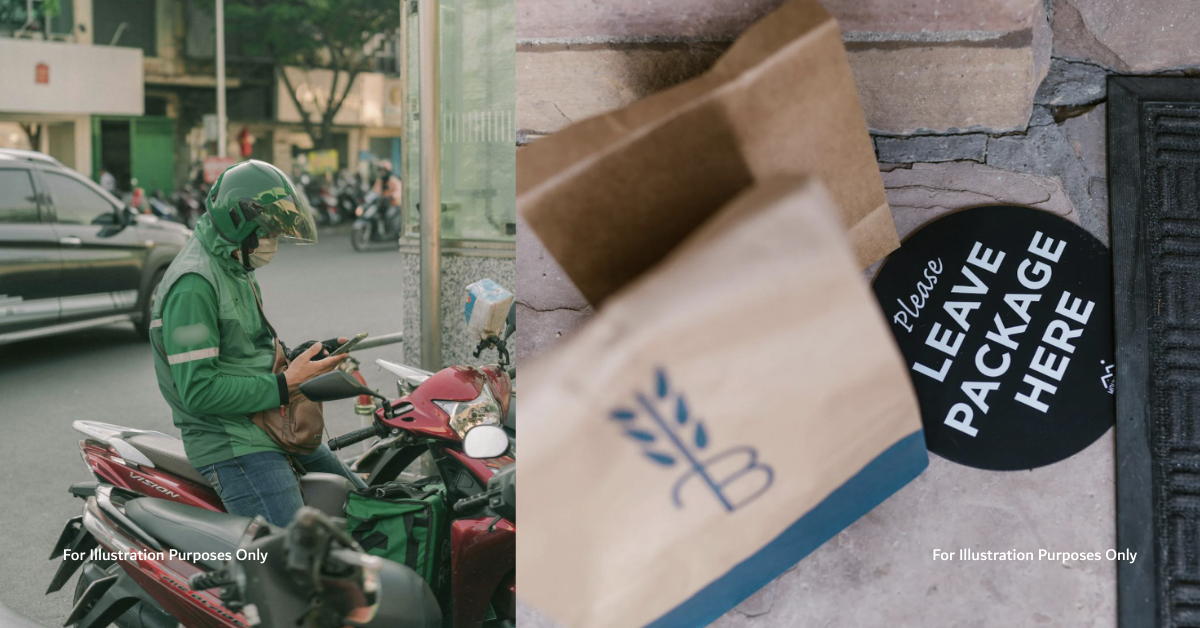
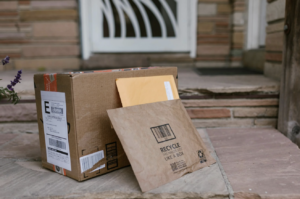
A full-time delivery rider has questioned whether customers should expect riders to tailgate residents into secured blocks — after he was left waiting outside a locked building gate with no response.
In a reader tip-off shared via email, the rider described an encounter that left him frustrated and, in his words, reflecting on “how delivery riders are sometimes perceived and treated.”
Reader Tip-Off: “Follow People In” Instruction
The rider said he had accepted a grocery order to a block fitted with an intercom-controlled gate.
However, in the delivery notes, the customer allegedly stated that the intercom had been removed by the landlord and instructed him to “follow people in” before hanging the groceries on the gate instead of placing them on the floor.
When he arrived, the gate was locked.
He said he waited around 10 minutes, hoping another resident would enter so he could gain access. During that time, he tried calling and messaging the customer multiple times through the app, but received no reply.
“As a delivery rider, waiting indefinitely at one location is not always possible,” he wrote. “We often have multiple active orders, and our earnings depend on time and efficiency.”
Eventually, he said he decided to leave the items safely hooked on the gate, took a photo as proof of delivery, and informed the customer before moving on to his next order.
Shortly after, the customer responded angrily, accusing him of being lazy and irresponsible, and allegedly threatened to report him.
The customer reportedly insisted he should have waited until someone entered the block so he could follow them in.
Security Etiquette or Service Obligation?
The rider acknowledged that frustration crept into his replies during the exchange.
But he raised a broader question: should delivery riders be expected to tailgate strangers into secured residential blocks when customers are uncontactable?
Tailgating into residential properties can raise security concerns. In many estates, residents are reminded not to allow unknown individuals to enter behind them without proper access.
Yet riders say they are often pressured to meet “door-to-door” expectations, even when access arrangements are unclear.
“Expecting a rider to wait without confirmation, while ignoring calls and messages, shifts the burden unfairly,” he wrote.
He added that riders are paid per job, not per hour — meaning time lost waiting directly affects their income.
Delivery Riders Speak Up On Access Issues
His experience echoes frustrations shared online by other riders in recent days.
In one TikTok post, a delivery rider criticised condominium policies that prevent riders from riding in to complete deliveries, saying the system makes their lives “difficult” and wastes precious time.
In a follow-up video days later, the same rider suggested that managements of such developments consider installing delivery lockers at drop-off points — similar to those at certain institutions — so residents can collect their own orders.
He argued that walking 10 to 15 minutes from a guardhouse or basement parking area to a unit, and then back again, could mean losing up to 20 minutes per job.
“For us, time is money,” he said in the video. “We are human.”
“I Usually Reject This Type Of Condo”
The comments sections of both videos were filled with riders sharing similar grievances.
Some said they now reject orders to certain condominiums altogether.
“I usually reject this type of condo. Inform the rest of the riders to avoid.”

Another commenter wrote:
“Even I work delivery and PHV also, I see condo, I don’t take. Really troublesome.”
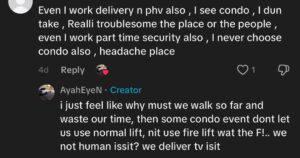
Others questioned why some managements do not designate proper collection tables at drop-off points or guardhouses to streamline the process.
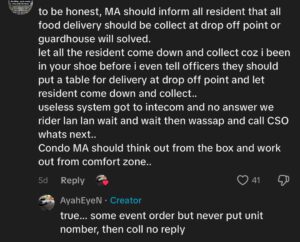
One commenter suggested management councils inform residents that food deliveries must be collected at the drop-off area, instead of requiring riders to navigate multiple access gates and lifts.
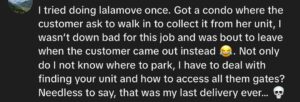
However, not everyone agreed.
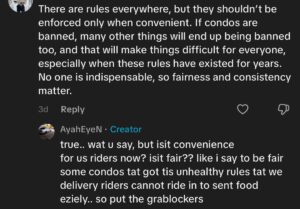
Another user pointed out that rules exist for security reasons and should not be enforced selectively, arguing that fairness and consistency matter for both residents and riders.
A Wider Conversation On Expectations
The reader who wrote in said his experience made him realise “how easily convenience can turn into entitlement.” He stressed that riders are not asking for special treatment, but only basic cooperation.
“If access to a location is restricted, it should be the customer’s responsibility to ensure delivery can be completed reasonably and safely,” he said.
As delivery services become part of daily life in Singapore, tensions between efficiency, security, and service expectations continue to surface.
For riders who depend on each completed job to make a living, every locked gate — and every unanswered call — carries a cost.
Perhaps, as some riders suggest, the solution lies not in blame, but in clearer systems, shared responsibility, and a bit more understanding on both sides.
More from Wake Up Singapore:-
Silly Mistake: Malaysian Accidentally Orders GrabFood From Singapore, Shocks Delivery Rider
Malaysian Delivery Rider Receives RM1,000 Tip—Video Goes Viral
One-Handed Delivery Rider Refuses to Quit, Completes Up to 50 Orders Daily
If you have a story or a tip-off, email admin@wakeup.sg or get in touch via Whatsapp at 8882 5913.
Interested in advertising on our media channels? Reach out to us at admin@wakeup.sg!
Since you have made it to the end of the article, follow Wake Up Singapore on Telegram and X!
Wake Up Singapore is a volunteer-run site that covers alternative views in Singapore. If you want to volunteer with us, sign up here!