

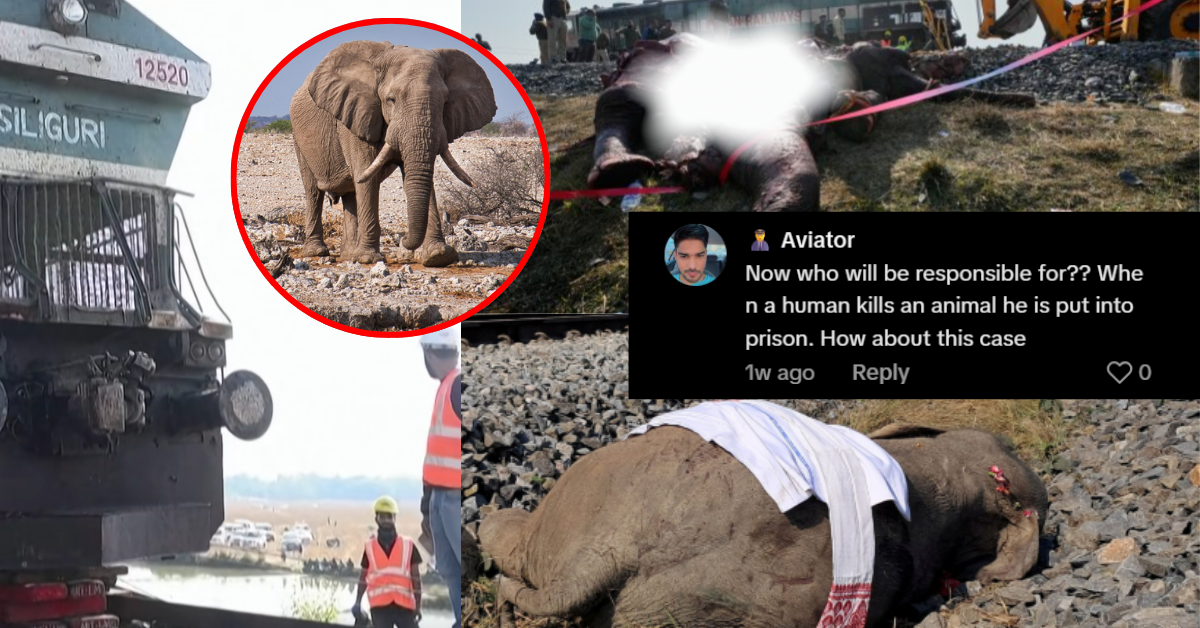
A serious accident happened in Hojai district, Assam, in northeast India early on 20 December. A high-speed passenger train travelling towards Delhi hit a herd of wild Asian elephants that were crossing the railway tracks.
Local officials confirmed that seven elephants were killed, including young calves. Another calf was badly injured but survived. The accident happened before sunrise, when visibility was low, and it quickly drew attention from railway authorities and wildlife teams.
Train Unable to Stop in Time
The train driver suddenly saw a large group of elephants near the tracks and immediately applied the emergency brakes. However, the train was moving at high speed and could not stop in time.
Some elephants moved closer to the tracks instead of away, which led to the tragic collision. Five train carriages derailed, but thankfully, no passengers or railway staff were injured. The damaged coaches were later seen tilted beside the tracks.
Elephants and Assam’s Railway Lines
Assam is home to one of the largest elephant populations in India, with nearly 6,000 elephants living in the state. Elephant herds often cross railway lines while moving between forest areas.
Although railway tracks in Assam pass through many elephant habitats, officials said this particular location was not a marked elephant corridor. This made the incident more surprising for both railway workers and wildlife experts.
Emergency Response After the Crash
Soon after the collision, forest officials, veterinarians, and railway staff arrived at the scene. The injured calf was treated, while the bodies of the dead elephants were examined by veterinarians and later buried nearby.
Train services in the area were disrupted for several hours, with cancellations and route changes reported throughout the day. Heavy machinery was used to clear the tracks and restore rail traffic.
Passengers Safe but Deeply Affected
Passengers on the Delhi-bound express were shaken by the incident but remained physically unharmed.


Many said they felt the impact and sudden stop but did not know what had happened at first.
Railway officials later arranged alternative travel options as repair work continued. The train’s locomotive was also damaged in the crash, adding to delays across the region.
A Repeated Pattern of Collisions
This incident adds to a growing number of train-related elephant deaths in Assam.
Shrinking forest areas and expanding transport routes have increased contact between wildlife and human activity. Saturday’s crash once again highlights how closely trained and wild animals now share the same spaces in parts of India.
Watch the video here:
@alarabiya_eng Seven elephants are killed after a passenger train smashes into a herd in northeast India, officials say. #India
More from Wake Up Singapore:-
Elephant Prevents Longtime Keeper from Leaving, Blocks His Exit
Man’s Selfie Attempt With Wild Elephant Ends in Trampling and Severe Injuries
If you have a story or a tip-off, email admin@wakeup.sg or get in touch via Whatsapp at 8882 5913.
Interested in advertising on our media channels? Reach out to us at admin@wakeup.sg!
Since you have made it to the end of the article, follow Wake Up Singapore on Telegram and X!
Wake Up Singapore is a volunteer-run site that covers alternative views in Singapore. If you want to volunteer with us, sign up here!