
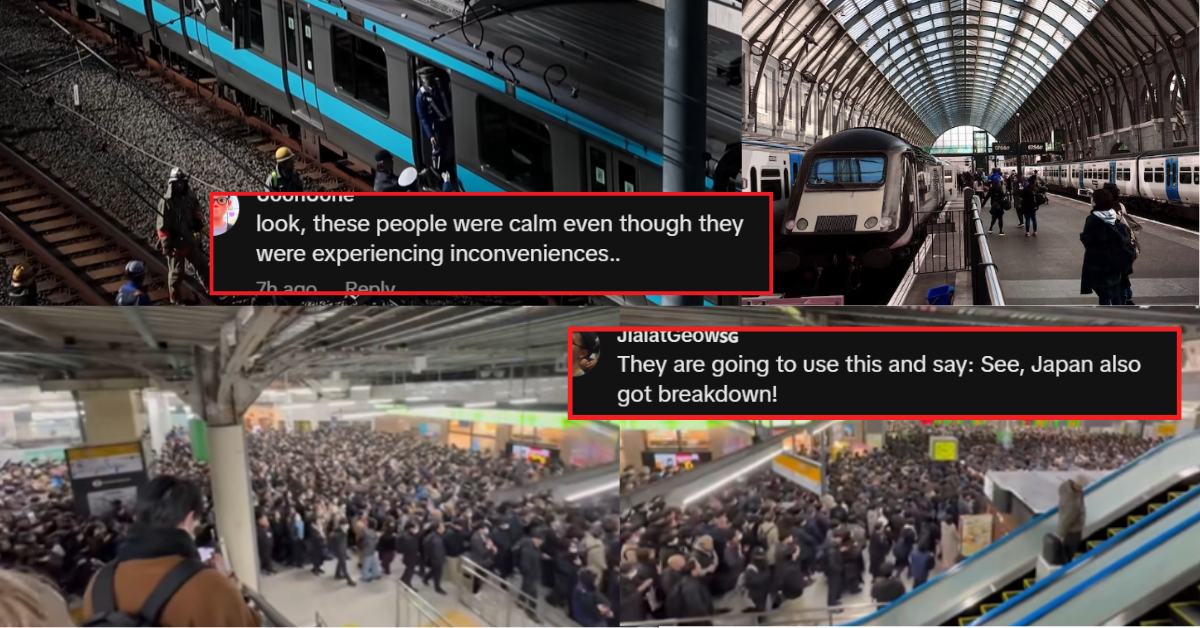
It was a normal Friday morning in Tokyo. But at busy Shinjuku Station, something was wrong. The “Delay” sign on the boards kept flashing. People looked at their phones.
They looked at the empty tracks. No trains were coming. The famous Yamanote Line and Keihin-Tohoku Line had completely stopped.
A Small Problem, A Big Effect
The trouble began at Tamachi Station. Workers were fixing the railway at night. In the morning, they could not turn the power back on. Someone saw smoke coming from a box near the train tracks. This small problem caused a very big mess. Two of the most important train lines in Tokyo went dark and silent.
Imagine you are on a train. Suddenly, it stops in a dark tunnel. The lights go out. This happened to many people. On one train, passengers had to open the doors. Firefighters helped them walk next to the tracks to safety. They walked quietly in the dark. One passenger, Mr. Sato, said, “It felt like a movie scene. All we could hear were our footsteps.”
A City Learns to Wait
Above ground, Tokyo’s busiest stations were full of people. But there was no pushing. Everyone waited calmly. Some people sat on the floor. Others looked for buses. The bus stops had very, very long lines. It was almost impossible to find a taxi. In total, 673,000 people could not travel as planned. Everyone had the same question: how do I get to work now?
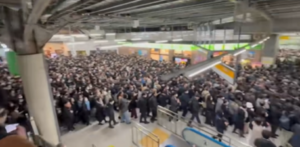
These trains are the heart of Tokyo. The Yamanote Line is a green circle train. It connects the most important parts of the city. The Keihin-Tohoku Line goes north and south. Millions of people use them every day. They are famous for being on time, always. So when they stopped, the whole city felt it. It showed that even the best system can sometimes break.
The Welcome Sound of a Train
For more than nine hours, Tokyo was quieter than usual. Then, in the late morning, people at a station heard a low rumble. One slow test train moved along the Yamanote track.
A few people on the platform clapped. The digital signs changed from “Suspended” to “Resuming Service.” People sighed with relief. Slowly, the platforms began to clear.


The normal sounds of the city – the trains, the announcements, the crowds – started again. Tokyo’s heartbeat was back.
Watch the video here.
More from Wake Up Singapore:-
Not Sex but Companionship—Japan’s New Marriage Trend, ‘Friendship Marriage’
Japan’s New Dating App for Married Couples Has 350K Users and Counting
Japan’s New “Bachelor Tax” Sparks Anger as Population Crisis Deepens Nationwide
If you have a story or a tip-off, email admin@wakeup.sg or get in touch via Whatsapp at 8882 5913.
Interested in advertising on our media channels? Reach out to us at admin@wakeup.sg!
Since you have made it to the end of the article, follow Wake Up Singapore on Telegram and X!
Wake Up Singapore is a volunteer-run site that covers alternative views in Singapore. If you want to volunteer with us, sign up here!