

Article by Viory
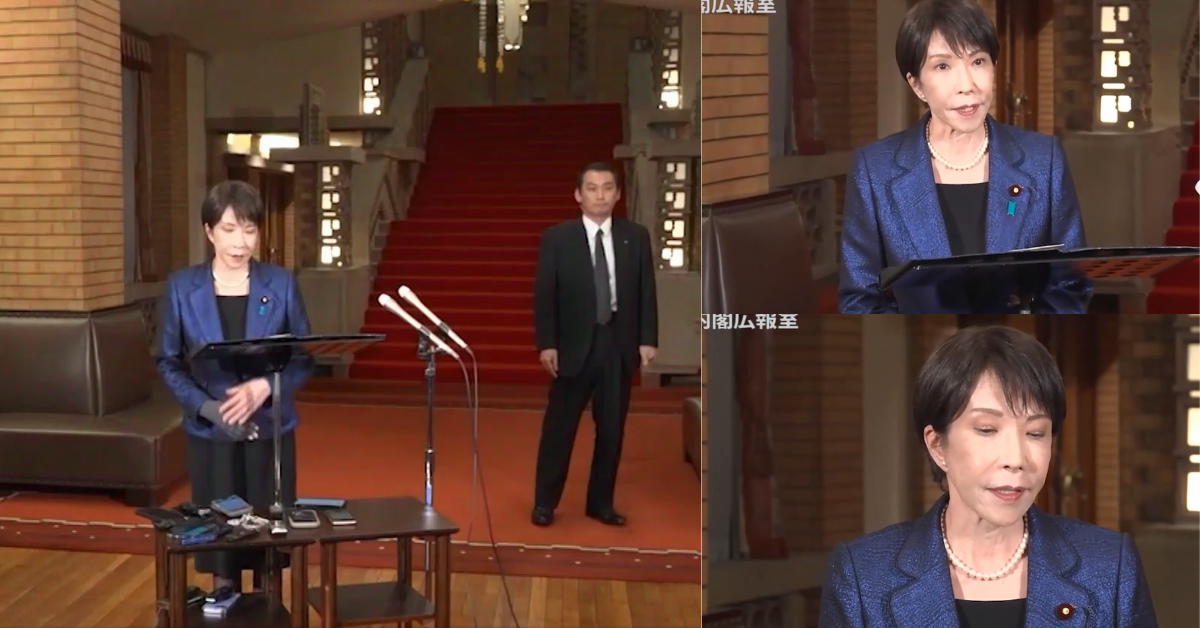
Amid rising tensions in the Middle East, Japanese Prime Minister Sanae Takaichi announced that Japan will release oil from private and state reserves to unburden the energy market at a press conference on Wednesday in Tokyo.
“In light of the current situation in Iran, crude oil prices have been rising recently, and at one point this week, they approached 120 dollars per barrel. Incidentally, while crude oil prices today are generally stable at around 90 dollars per barrel, there is no denying the possibility that gasoline prices could rise to a level exceeding 200 yen per litre,” she said.
“Japan has decided to take the lead and release its stockpiles as early as the 16th of this month to ease supply and demand in the international energy market. First, we will release 15 days’ worth of private stockpiles, and for the time being, we will release one month’s worth of national stockpiles,” Takaichi continued.
The Japanese leader warned that as the situation in the Middle East remains ‘unpredictable’ and the Strait of Hormuz, one of the world’s most critical energy passages, is shut down, oil supply to the nation can ‘decrease significantly’ by the end of March.
On the same day, Director of the International Energy Agency (IEA), Fatih Birol, pledged to launch the largest ever release of emergency oil stocks in its history, 400 million barrels of oil, in response to the effect of the Middle East conflict on global energy markets.
The closure of the maritime route by Iran in response to US-Israeli attacks severely threatens energy supplies to Japan, which is heavily dependent on Middle Eastern fossil fuels. The country receives about 95 percent of its crude oil and 11 percent of its liquefied natural gas imports from the region, with most shipments passing through the Strait of Hormuz.
Since the conflict broke out, three cargo vessels were hit by ‘unknown projectiles’ in the strait, including a Japan-flagged container on Wednesday.
It follows a joint Israeli-US military operation against Iran launched on 28 February. Tehran responded to the attack with missile and drone attacks targeting Israel and US military facilities across the region, with explosions reported in several Gulf countries.
The war has also seen soaring global energy prices and the effective closure of the Strait of Hormuz, which handles 20 per cent of global oil traffic.
Article by Viory
More from Wake Up Singapore:
Zero Room for Clothes: Man’s Japan Suitcase Is 100% Instant Noodles and Sambal
All aboard meow express! – Feline stationmasters get fans on track for Japan’s Cat Day
Japan Opens Free-Drink Bar for People Considering Quitting Their Jobs
If you have a story or a tip-off, email admin@wakeup.sg or get in touch via Whatsapp at 8882 5913.
Interested in advertising on our media channels? Reach out to us at admin@wakeup.sg!
Since you have made it to the end of the article, follow Wake Up Singapore on Telegram and X!
Wake Up Singapore is a volunteer-run site that covers alternative views in Singapore. If you want to volunteer with us, sign up here!