

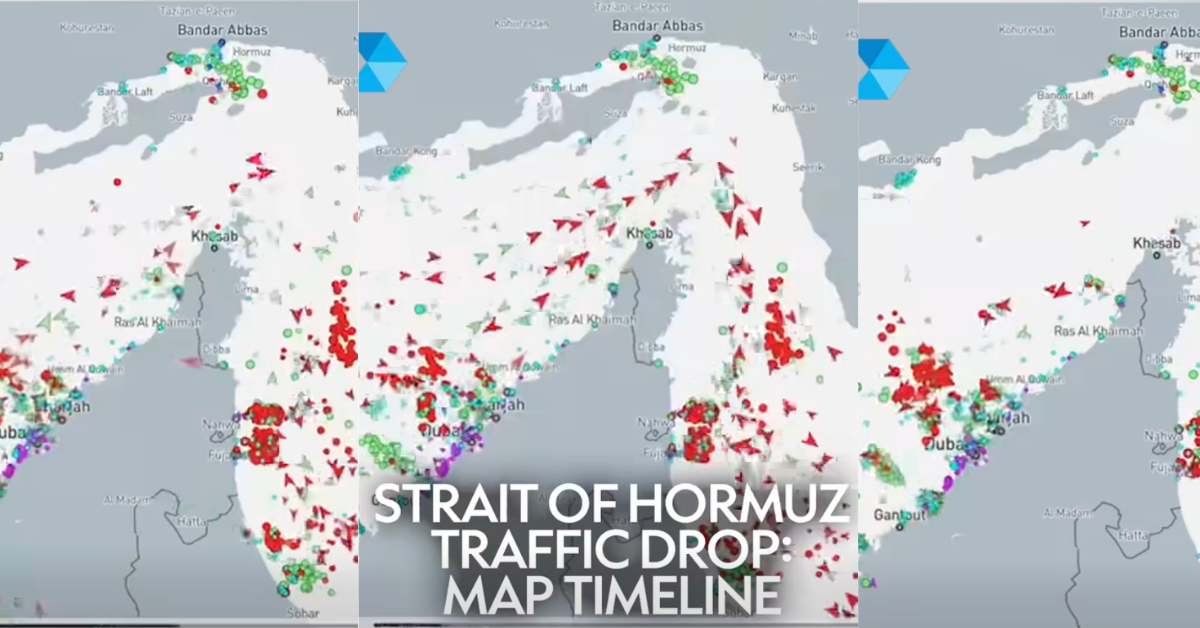
The Strait of Hormuz, one of the world’s most important sea lanes between Iran and Oman, has suddenly suffered a major digital disruption. Advanced GPS jamming and spoofing are severely disrupting shipping. The region has become a virtual electronic warfare zone since the joint US-Israeli attack on February 28 under ‘Operation Epic Fury.’
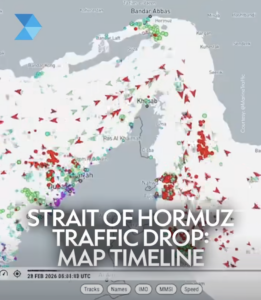
Normally, about 20 percent of global oil supplies pass through this strait. However, now many ships are losing their way in a thick fog of false signals. As a result, international energy transport has also slowed down.
GPS Outage
Initial analysis has shown that the ships’ navigation systems are showing incorrect positions. Many captains have complained that their screens sometimes show ships on land and sometimes at airports. Normally, ships use GPS to determine their position and AIS to signal each other. But now both these systems are being severely disrupted. As a result, even experienced sailors are getting confused. This has increased the risk rapidly in this busy waterway.
Jamming and Spoofing
Experts say there are two types of electronic attacks going on here. The first is jamming, where satellite signals are covered with strong radio noise. As a result, GPS becomes practically ineffective.
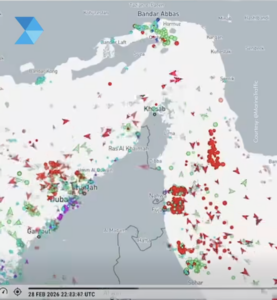
The second is spoofing, which is a more deceptive method. In this, a completely false but credible position is sent to the ship’s computer. As a result, the ship’s course on the navigation map suddenly becomes erratic.
Ship Movement
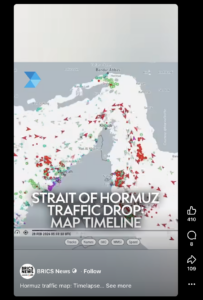
According to data from maritime tracking companies, since February 28, the ship’s movement patterns have started to spread abnormally. Instead of the normal straight path, the tracks of the ships suddenly jump. Currently, more than 1,100 civilian oil tankers are believed to be stuck in this digital fog. This strait, which is only 33 kilometers wide, has now become difficult to safely cross.
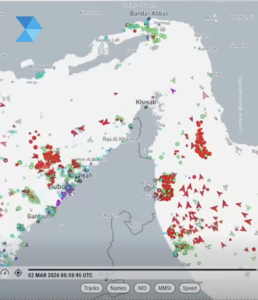
As a result, pressure has also been created on the global energy supply chain. It is feared that instability in the market may increase if the situation continues.
Security Risks
The risk of collision has increased manifold due to the failure of satellite navigation. Large oil tankers cannot stop or turn quickly, so even a small mistake can lead to a major accident. Already on March 1, a tanker named ‘Skylight’ was hit off the coast of Oman and its 20-member crew had to be evacuated.
Currently, sailors have to rely on manual radar and visual observations in many cases. This is slowing down speed and increasing transportation costs.
According to analysts, the crisis has made it clear how dependent modern shipping is on electronic signals.
Watch the video here:
More from Wake Up Singapore:
Fighter jet down – US F-15 crashes over Kuwait as ‘several’ reported hit
US strikes at sea – CENTCOM says 11 Iranian ships destroyed in Gulf of Oman
If you have a story or a tip-off, email admin@wakeup.sg or get in touch via Whatsapp at 8882 5913.
Interested in advertising on our media channels? Reach out to us at admin@wakeup.sg!
Since you have made it to the end of the article, follow Wake Up Singapore on Telegram and X!
Wake Up Singapore is a volunteer-run site that covers alternative views in Singapore. If you want to volunteer with us, sign up here!