

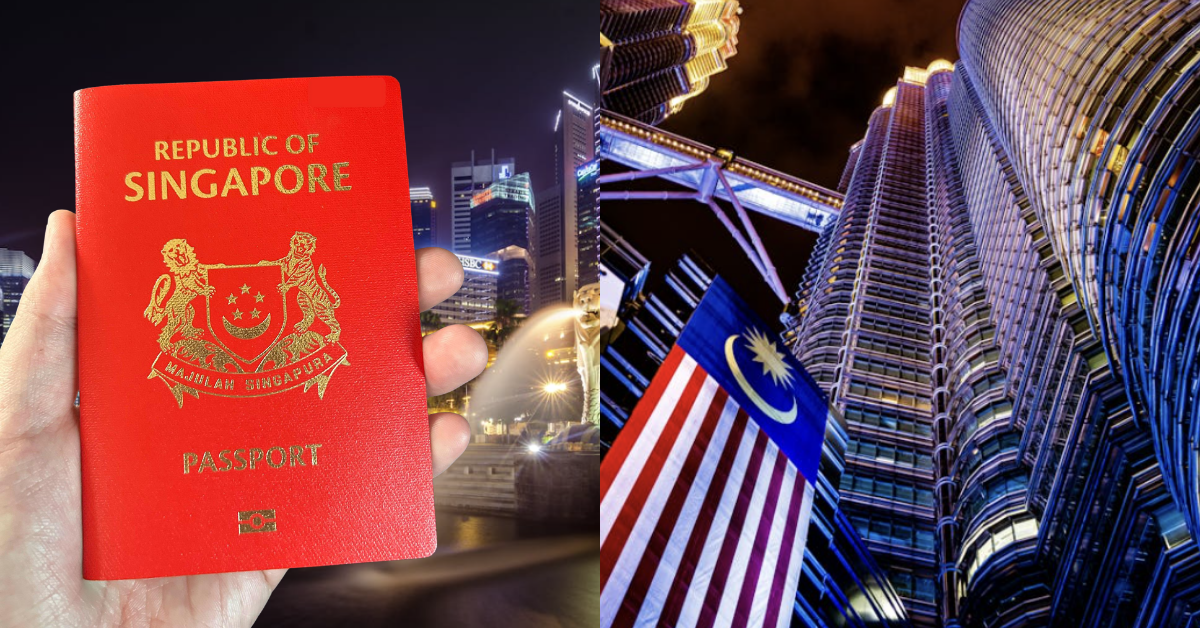
A Malaysian woman’s emotional Facebook post about giving up her Malaysian citizenship to become a Singaporean has sparked widespread discussion online, shedding light on the difficult decisions many cross-border migrants quietly grapple with for years.
The post, originally shared on the Facebook page “我的cpf够用吗”, quickly circulated across social media platforms.
In the lengthy reflection, the woman described her decision not as an act of abandoning her roots, but as a practical choice shaped by family, belonging, opportunity, and the realities of adulthood.
Growing Up Somewhere Else
The woman revealed that she moved to Singapore when she was 18 years old.
Over time, the country became more than just a workplace. It became the place tied to her adulthood, friendships, routines, and memories.
“My best years, the streets I know best, and my closest circle of friends are all here,” she wrote.
While some told her she could always return to Malaysia to work, she admitted that even living in Kuala Lumpur or Penang would still make her feel unfamiliar after spending most of her life across the border.
She described the feeling bluntly:
“My hometown couldn’t give me a livelihood.”
Rather than portraying migration as glamorous, her words reflected gradual emotional distance — the kind that builds quietly over years spent elsewhere.
Family Became The Turning Point
Much of the post centred around parenthood.
According to the woman, having children changed the way she viewed citizenship, finances, and long-term stability. Raising a child in Singapore while remaining a Permanent Resident (PR), she said, became increasingly difficult financially.
At one point, she questioned whether she should send her child back to Malaysia while continuing to work in Singapore alone. The thought stayed with her.

“Money can always be earned slowly, but once you miss your child’s growing years, they’re gone forever,” she wrote.
Instead of describing the decision in political terms, the post focused heavily on proximity — being able to return home daily, hug her child, and keep her family physically together.
Fairness, Opportunity, And Invisible Barriers
Another section of the post touched on opportunity and social mobility. Without naming specific policies, the woman said she felt Singapore offered a more equal environment, where effort was more closely tied to opportunity.
Back in Malaysia, she wrote, hard work did not always guarantee the same chances because of what she described as “invisible barriers”.
“I hope my child can grow up competing in a fair environment,” she explained, “without being pushed to the back because of their identity.”
What The Pandemic Changed
The Covid-19 pandemic also shaped her thinking. Like many people who experienced long lockdowns and uncertainty during those years, she said the period forced her to confront how fragile life could be.
“You never know whether tomorrow or tragedy will come first,” she wrote.
Rather than waiting for a perfect future, she explained that she wanted a life that allowed her to feel more secure and emotionally at peace in the present.
The reflection added another layer to the post — one less focused on economics and more centred on emotional survival and stability.
More Than One Person’s Story
Although the post reflected one woman’s personal experience, the conversation surrounding it points to a much broader reality.
According to figures referenced by BFM, more than 61,000 Malaysians reportedly gave up their citizenship over a five-year period, with Singapore remaining one of the most common destinations.
Many cite higher salaries, career opportunities, education, family security, and long-term stability as major reasons for relocating permanently. For some, the move is financial. And for others, it is emotional.
In the final part of her post, the woman clarified that surrendering her Malaysian citizenship did not mean she stopped loving the country she came from.
“My hometown will always be my hometown,” she wrote, “but life needs a way forward.”
Her story, shared in a few paragraphs online, ultimately reflected a balancing act many migrants understand well — between roots and reality, memory and survival, home and the life eventually built elsewhere.
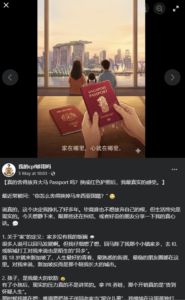
Read the original post here:
More from Wake Up Singapore:-
“Thank You SGD”: Malaysian’s Pre-Dawn Commute Highlights Cross-Border Work Reality
If you have a story or a tip-off, email admin@wakeup.sg or get in touch via Whatsapp at 8882 5913.
Interested in advertising on our media channels? Reach out to us at admin@wakeup.sg!
Since you have made it to the end of the article, follow Wake Up Singapore on Telegram and X!
Wake Up Singapore is a volunteer-run site that covers alternative views in Singapore. If you want to volunteer with us, sign up here!