

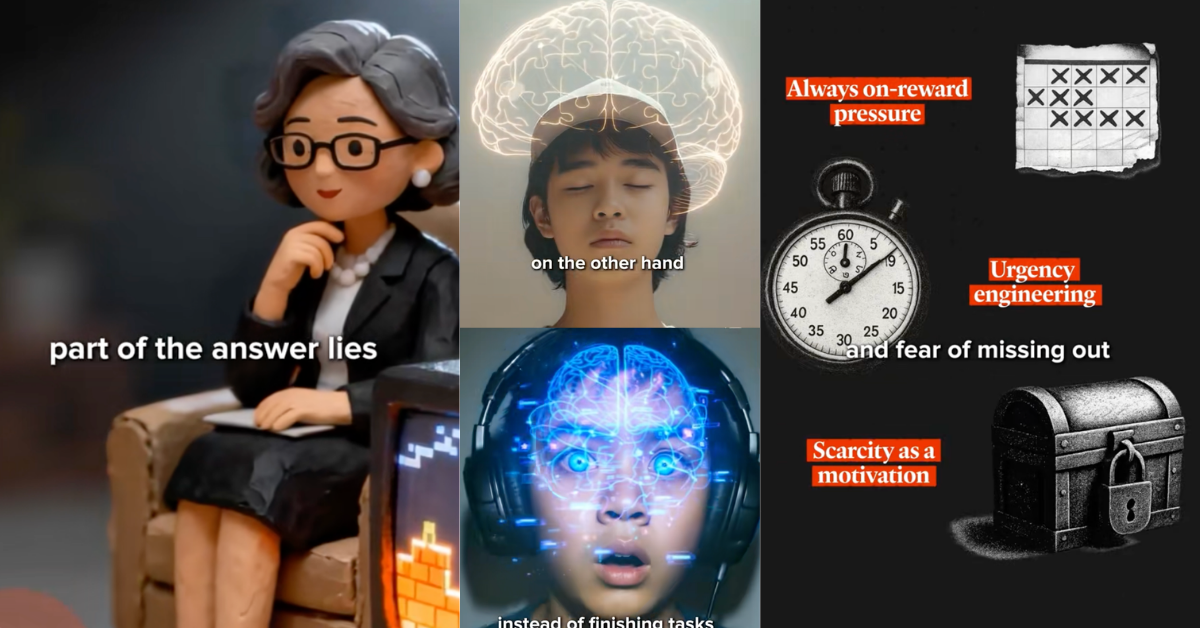
A new debate has begun on why today’s children get bored easily, while previous generations seem to be more patient. A Singapore-based content creator recently raised the question in a video. According to him, one possible explanation lies in the type of video games they played as children.

He says that many popular games from the 90s were difficult and unforgiving. There was little room for error or easy progression. As a result, players developed patience, planning and problem-solving skills. However, he believes that modern games are forming different types of habits due to regular rewards and instructions.
The era of Difficult Games
In the 90s, playing video games was all about facing challenges. For example, games like Super Mario Bros., Sonic the Hedgehog or Prince of Persia had very few save points or easy instructions. Players were given only a few chances and had to try again from the beginning if they failed.

He claims that this process developed patience and concentration. At the same time, players had to find their own way. As a result, finishing the game was a great feeling of achievement.
Memory and Planning
Other games, such as Tetris, Doom, Quake, and The Legend of Zelda, required players to memorize maps or hidden paths. According to researchers, these games activate the memory and orientation parts of the brain.

As a result, players gradually learned to analyze problems and develop strategies. Sometimes it took days or weeks to complete a level. Still, there was a special satisfaction in achieving success at the end of that long effort.
Social Experience
At that time, gaming was very much a social experience. It was common to go to a friend’s house and play games together. Sometimes you had to share a controller. As a result, you could learn to wait your turn patiently. You also had to wait for magazines to learn about new games. The creator believes that this habit of delayed rewards created tolerance in many people.

Modern Gaming Reality
The nature of gaming has changed a lot these days. Most modern games guide the player forward with tutorials and instructions at the beginning. The impact of failure is also reduced due to auto-saving.

At the same time, rewards such as XP points, skins, daily missions or limited-time events are regularly available. Many games do not have a fixed ending but rather a continuous progression. As a result, some experts believe that this can reduce attention span.

In this context, the content creator reminds us that before calling the new generation lazy or inattentive, it is important to understand the environment in which they grew up. Because they are growing up in a completely different reward system. According to him, games are not only entertainment, but they also gradually affect thinking and behavior.
Watch the video here:
@vulcanpostsg Remember when games gave you three lives and zero mercy? 🎮 90s video games trained patience, memory, and frustration tolerance — no save points, no hints, no instant rewards. Today’s games are faster, guided, and built around constant stimulation and retention. Psychologists say that shift matters, because different games train different brains. Do today’s games make it harder to stay focused? 90sKids GenZ Psychology VulcanPost
More from Wake Up Singapore:
Malaysian Government Considering New Regulation on Online Games—For Children
‘I Tried My Best,’ Written in Pencil—Tutor’s Story of Singapore Student Leaves Everyone Speechless
If you have a story or a tip-off, email admin@wakeup.sg or get in touch via Whatsapp at 8882 5913.
Interested in advertising on our media channels? Reach out to us at admin@wakeup.sg!
Since you have made it to the end of the article, follow Wake Up Singapore on Telegram and X!
Wake Up Singapore is a volunteer-run site that covers alternative views in Singapore. If you want to volunteer with us, sign up here!