
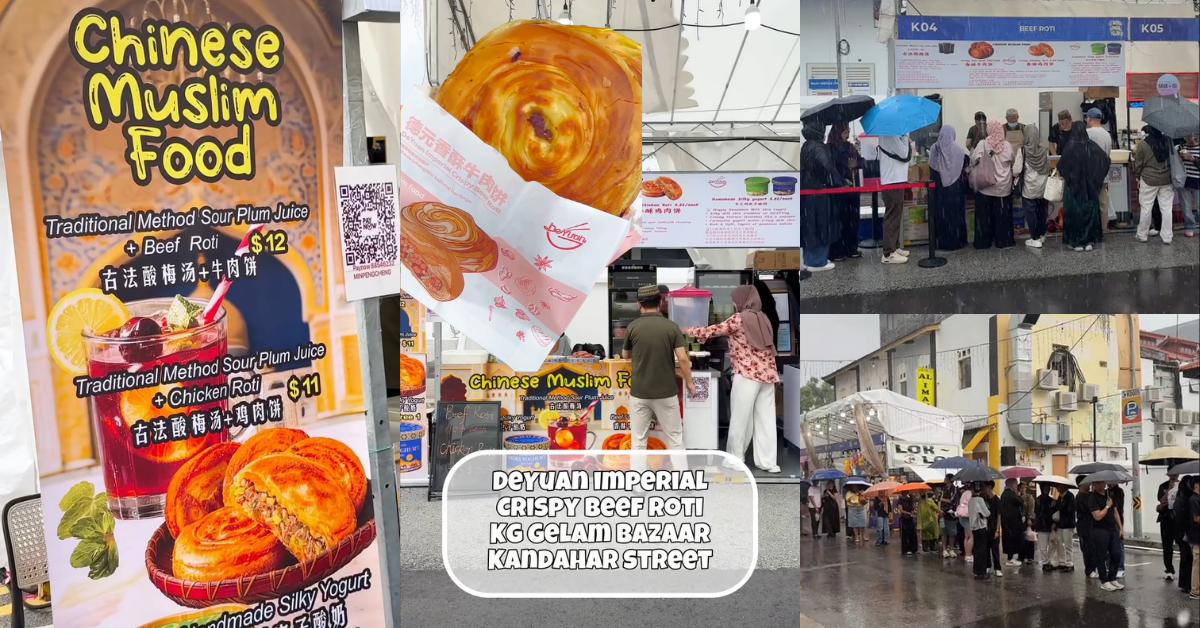
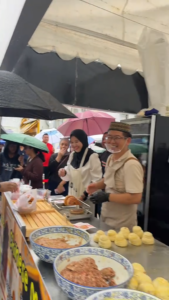
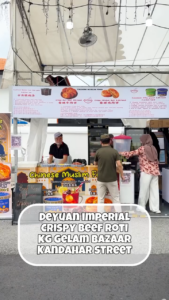
Even with umbrellas up and the ground slick from rain, a long line of customers continued to snake past a small food stall along Kandahar Street. Videos posted on TikTok by a staff member from De Yuan Imperial Beef Roti show people waiting patiently, some shielding their food from the drizzle, others filming the action at the booth.
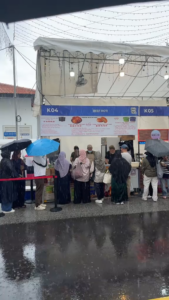
The clips, shared under the account @tim.mc78 and tagged at Kandahar Street Cultural Centre, capture workers pressing dough, filling it with beef, and frying the rotis on hot griddles as customers look on. Despite the weather, the queue barely thins.
@tim.mc78
The stall is operating at the Gemilang Kampong Gelam Ramadan Bazaar, one of Singapore’s most visited Ramadan bazaars, stretching from Muscat Street to Kandahar Street and Sultan Gate Park.
Why De Yuan’s Beef Roti is Drawing Crowds
De Yuan’s appeal lies not just in the food, but in what it represents. The stall is run by Chinese Muslim vendors, serving halal Chinese-style beef roti at a bazaar rooted in Malay-Muslim tradition. For many visitors, that combination feels both familiar and refreshingly different.
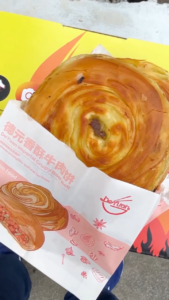
In the TikTok videos, the rotis are cooked fresh to order — flattened, stuffed generously with beef, then fried until crisp. The sight alone has been enough to stop passers-by, with several clips showing customers joining the line after watching a few rotis being made.
It’s the kind of stall that thrives on word of mouth, and in this case, social media has done much of the talking.
Kampong Gelam Remains the Heartbeat of Ramadan Bazaars
The Kampong Gelam Ramadan Bazaar remains one of the biggest Ramadan events in Singapore. This year’s edition runs from 15 February to 15 March 2026, covering Baghdad Street, Kandahar Street and the area outside Sultan Gate.
Beyond food, the bazaar features live performances, workshops, and family-friendly activities. It’s also one of the few Ramadan bazaars that blends cultural programming with street food, drawing both locals and tourists nightly.
Stalls like De Yuan’s reflect how the bazaar has evolved — still grounded in tradition, but increasingly open to cross-cultural flavours and new food trends.
A City-wide Ramadan Bazaar Season
Kampong Gelam is just one stop in a packed Ramadan calendar across the island. The Geylang Serai Ramadan Bazaar, starting from 14 February 2026, remains the largest, with hundreds of stalls selling everything from kuih to Raya outfits.
Town-based bazaars like Me-You Market Eid Core and CelebFest Ramadan cater to shoppers looking for fashion, gifts, and celebrity appearances, while heartland favourites such as Admiralty Ramadan Bazaar, Woodlands Ramadan Bazaar, and multiple Tampines void deck bazaars keep things local and accessible.
There are also destination-style events like Absolut Bazaar, known for its marathon queues, and NusantaraRaya @ Jewel, bringing Ramadan vibes to the airport.
More than Food
What the rain-soaked queue at De Yuan’s stall shows is that Ramadan bazaars in Singapore are no longer just about convenience or breaking fast. They are social spaces where people linger, try something new, and don’t mind waiting a little longer for the experience.
At Kampong Gelam, where the lights glow against wet pavements and food stalls stay busy even in bad weather, that atmosphere is hard to miss.
Watch videos here:
@tim.mc78 Thx so much for your Support !
@tim.mc78
@tim.mc78 Chinese beef Roti & Chicken Roti is cooking,ready soon!!!
More from Wake Up Singpaore:-
Ramadan Bazaar Showdown: Comparing Singapore’s & Malaysia’s Must-Try Delicacies
Ramadan relief – UAE delivers first batch of Saqr humanitarian aid to Gaza
If you have a story or a tip-off, email admin@wakeup.sg or get in touch via Whatsapp at 8882 5913.
Interested in advertising on our media channels? Reach out to us at admin@wakeup.sg!
Since you have made it to the end of the article, follow Wake Up Singapore on Telegram and X!
Wake Up Singapore is a volunteer-run site that covers alternative views in Singapore. If you want to volunteer with us, sign up here!